

Justice must be accessible and affordable for the common man: CJI Justice Surya Kant
Justice must be accessible and affordable for the common man, said Chief Justice Of India (CJI) of India Justice Surya Kant on Sunday during his speech at the symposium "Ensuring Justice for the Common Man: Strategies for Reducing Litigation Costs and Delays" at Cuttack.

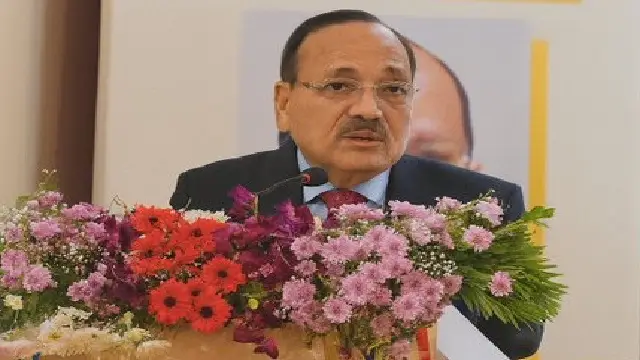
Cuttack: Justice must be accessible and affordable for the common man, said Chief Justice Of India (CJI) of India Justice Surya Kant on Sunday during his speech at the symposium “Ensuring Justice for the Common Man: Strategies for Reducing Litigation Costs and Delays” at Cuttack.
Justice must be felt in the everyday life of the common citizen, not remain an abstract constitutional promise, said the CJI adding that the rule of law acquires meaning only when justice is accessible, affordable, and humane.
He further said that the two biggest obstacles facing the common man are the high cost of litigation and prolonged delays in dispute resolution, which erode faith in the justice system.
The CJI shared the poignant example of an elderly farmer waiting outside court, highlighting how delays impose emotional and financial hardship far beyond legal expenses.
Here are some key points from CJI Justice Surya Kant’s speech:
- Case pendency is not merely a statistical concern but an ecosystem-wide problem affecting district courts, High Courts, and the Supreme Court alike.
- Timely and consistent finality from constitutional courts brings confidence and stability across the judicial hierarchy, benefiting especially the district judiciary.
- The “Mediation for the Nation” initiative demonstrated strong public and institutional response, reaffirming mediation as an effective, culturally rooted dispute resolution mechanism.
- Mediation reflects India’s traditional dispute resolution practices, such as Panchayat systems, and should be embraced as a modern continuation of that heritage.
- Lawyers play a crucial role in promoting early mediation. Advising clients on settlement is not a loss of profession but a service to justice.
- Governments must adopt flexible, policy-driven approaches to mediation and avoid unnecessary appeals driven by fear of bureaucratic scrutiny.
- Technology helped courts function during the pandemic and can reduce distance and delay, but it must remain inclusive and serve justice–never replace human judgment.