

UAE Records Major Cultural Milestones Backed by National, Knowledge Efforts
UAE’s 2025 cultural milestones include new museums, archaeological discoveries, heritage laws and a stronger global creative presence

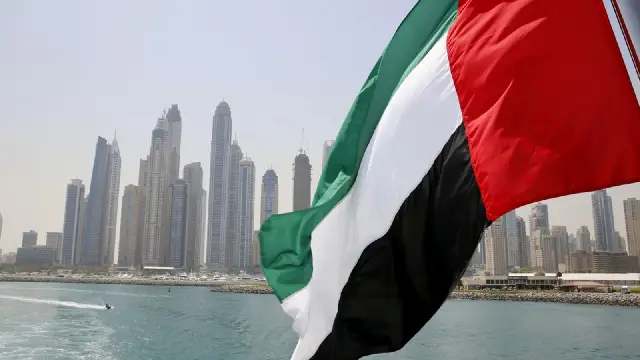
Abu Dhabi: The United Arab Emirates witnessed a series of prominent cultural and knowledge achievements in 2025, extending its approach to strengthening national identity, developing the cultural sector, safeguarding tangible and intangible heritage, and consolidating the country’s position as a global destination for knowledge, creativity and the arts.
Federal and local efforts continued through the launch of high-quality cultural initiatives, the opening of major museums, the announcement of significant archaeological discoveries, and the strengthening of the UAE’s presence on the global cultural stage.
The UAE approved the Sheikh Zayed Farm in Al Khawaneej as the country’s third national site, alongside Dar Al Etihad and Argoub Al Sedirah, in recognition of its historical significance as the location of pivotal meetings during the establishment of the Union.
The Cabinet approved the drafting of a federal law on cultural heritage aimed at protecting, documenting, preserving, managing and promoting the UAE’s cultural heritage, encouraging its study, enhancing cultural exchange and diversity, and ensuring its sustainability.
The Ministry of Culture launched the National Policy for Preservation of Modern Architectural Heritage, which seeks to establish a national vision for preserving this heritage and supporting identity. The Cabinet also approved the general policy for the civilisation sector to enhance civilisational dialogue and reinforce shared national values.
The issuance of an Emiri decree establishing Sharjah Creative Quarter marked a qualitative addition to the cultural sector, providing a new platform to host innovative projects and strengthening Sharjah’s position as a hub for knowledge and creative work.
The Emirates Council for Balanced Development, in partnership with the Ministry of Culture, announced the launch of a wide package of programmes to support creatives and artisans and develop cultural tourism. These included support for 20 creative projects, training cultural ambassadors, and developing markets for traditional crafts.
In 2025, several museums were inaugurated, including teamLab Phenomena Abu Dhabi, Zayed National Museum, which narrates the story of the UAE from its deep roots to its modern renaissance, and the Natural History Museum Abu Dhabi. Dubai also announced the Dubai Museum of Art, DUMA.
Archaeological discoveries continued across the UAE. The Department of Culture and Tourism – Abu Dhabi announced the discovery of the first Iron Age cemetery in Al Ain, containing more than 100 burial sites and funerary artefacts that shed light on a previously unknown period of the region’s history.
Excavations on Al Ghallah Island in Umm Al Qaiwain revealed new findings indicating that the archaeological site extends to four times earlier estimates, including the discovery of a unique stone platform made of dugong bones, alongside pearls and evidence of advanced economic and social activities dating back to the Neolithic period.
In the field of book fairs, the Abu Dhabi International Book Fair 2025 attracted more than 400,000 visitors, while the 44th edition of the Sharjah International Book Fair concluded with over 1.4 million visitors, continuing to hold the title of the world’s largest book fair in terms of buying and selling publishing rights.
The UAE participated in the inauguration of several rehabilitated sites in the Iraqi city of Mosul under the Revive the Spirit of Mosul initiative, reaffirming its commitment to protecting global heritage. It allocated US$50.4 million for the reconstruction of al-Nuri Mosque and its Al-Hadba Minaret, as well as Al-Tahera and Al-Saa’a Churches.
The Arab Reading Challenge continued to strengthen its global standing, having attracted more than 163 million students since its launch and contributing to higher reading rates and a stronger relationship between generations and the Arabic language. The initiative received new support through a contribution from the Sobha Group in the form of an endowment valued at AED500 million to expand the reach of reading.
The UAE succeeded in inscribing four new elements on UNESCO’s Representative List of the Intangible Cultural Heritage. The Al Ayyala art was inscribed as a national file as one of the traditional performing arts inherited in the UAE, alongside the registration of Al Bisht, the bridal procession, and kohl as joint Arab files.
The UAE was elected Vice-President of the General Conference of the United Nations Educational, Scientific and Cultural Organization, UNESCO. The organisation also announced the inclusion of Emirati poet Ahmed bin Sulayem and United Arab Emirates University in its commemorations programme for 2026-2027.
(ANI/WAM)