


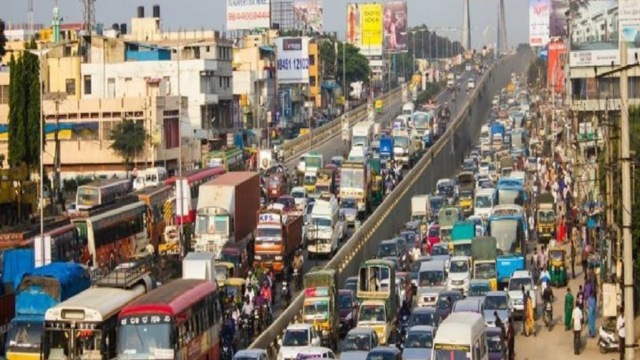
In an increasingly globalized economy, where narratives of rapid growth often dominate headlines, a deeper, more challenging story is unfolding within India’s workforce. Recent analyses, echoing findings from the International Labour Organization (ILO) and the Organisation for Economic Co-operation and Development (OECD), reveal a striking paradox: Indian workers clock some of the longest hours globally, yet their average weekly wages remain significantly lower than those in many comparable nations.
This isn’t just about statistics; it’s about the everyday reality for millions.
Imagine a construction worker in Bengaluru, often working six or even seven days a week, sometimes for 10-12 hours a day under the scorching sun. Or a gig economy delivery driver in Mumbai, hustling late into the night to meet targets, pushing past the 48-hour mark with little social security. These are the faces behind the numbers that show India’s workforce as among the most diligent globally, putting in an average of 46.7 to 48 hours per week. In stark contrast, countries like Germany and the USA average closer to 34-35 hours.
The Wage Gap: A Tale of Disparity
While the sheer volume of work is undeniable, the remuneration tells a different story. The average hourly wage in India hovers around ₹170-₹200, a fraction of what workers earn in developed economies. For perspective, an average hourly wage in the US can exceed ₹4,000, and in Germany, it’s upwards of ₹2,800. Even relative to China, where workweeks are similarly long, Indian wages often lag.
“It’s a complex interplay of factors,” explains Dr. Asha Sharma, a labor economist based in Delhi. “While the aspiration for economic growth is strong, the structures that would translate hard work into commensurate earnings are still evolving.”
Why the Disconnect? The Productivity Puzzle
The core of this paradox lies in what economists term the “Productivity Gap.” Productivity isn’t just about working hard; it’s about the economic value generated per hour of labor.
The Dominance of the Informal Sector: An estimated 90% of India’s workforce operates in the informal economy. These jobs—from agriculture and small-scale manufacturing to street vending and daily wage labor—often lack formal contracts, minimum wage enforcement, and social benefits. This vast segment pulls down national averages and leaves workers vulnerable.
Low Value-Add and Technology Adoption: In many sectors, the level of technology and automation remains significantly lower compared to industrialized nations. A task that might be completed by advanced machinery or sophisticated software in Europe in an hour might require multiple hours of manual labor in India. While this provides employment, it limits the “value-add” per hour, keeping wages depressed.
Labor Oversupply: With a youthful and rapidly growing population, India has an abundant labor pool. This oversupply, while a demographic dividend in some respects, can also depress wages. When there are more workers than available jobs, employers face less pressure to offer higher pay or better working conditions.
The 70-Hour Debate: A Symptom, Not a Cure?
The conversation around India’s work ethic gained significant traction recently with some industry leaders advocating for a 70-hour workweek for young professionals. While framed as a path to accelerate national growth, many experts and workers pushed back, citing concerns about burnout, mental health, and the potential for diminishing returns.
“Working longer hours doesn’t automatically mean higher productivity,” cautions Rajeev Menon, a HR consultant. “Beyond a certain point, fatigue sets in, errors increase, and overall output quality can suffer. Sustainable growth comes from smart work, skill enhancement, and technological leverage, not just brute force.”
Looking Ahead: Bridging the Gap
Addressing this “silent grind” requires a multi-pronged approach:
Formalization of the Economy: Gradually transitioning informal workers into the formal sector, providing them with legal protections, minimum wages, and social security.
Skill Development and Education: Investing in education and vocational training that equips the workforce with high-demand skills, enabling them to move into higher value-add industries.
Technological Adoption: Encouraging businesses to integrate modern technology and automation to boost productivity per hour.
Strengthening Labor Laws: Ensuring effective implementation of labor laws that protect worker rights, mandate reasonable working hours, and guarantee fair wages.
As India continues its journey towards becoming a global economic powerhouse, the well-being and equitable compensation of its vast workforce will be a critical determinant of not just economic statistics, but also societal prosperity and human development. The goal isn’t just to work more, but to work smarter, and to ensure that hard work translates into a dignified and rewarding life for all.