

Earth is rotating faster, here’s what scientists say and what you need to know
Earth's rotation speeds up, causing shorter days and potentially leading to a 'negative leap second' by 2029, scientists reveal.

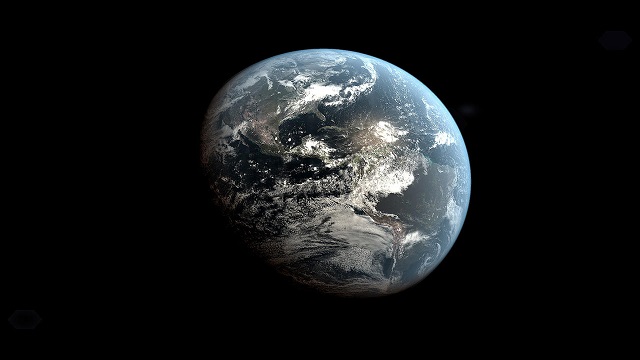
Earth has been accelerating its rotation, and days have been getting shorter by milliseconds. The change may not be tangible in everyday life, but it is important to global timekeeping. Scientists started monitoring this trend in 2020, and it is giving rise to discussions over making a possible adjustment to Coordinated Universal Time (UTC).
The duration of a day on Earth is usually 86,400 seconds or 24 hours, but it is variable. Through millions of years, the rotation of the planet has gradually slowed down because of natural forces such as the Moon’s gravitational pull and tidal forces. Indeed, in the time of the dinosaurs, a day was about 23 hours long. In the future, scientists forecast that days on Earth could eventually extend to 25 hours, but it may take more than 200 million years.
What is driving this recent surge? Scientists are still attempting to determine this. They are investigating causes such as seismic changes, variations in the planet’s fluid core, and Earth’s angular momentum variations. The Moon’s effect is still present, but internal dynamics may be involved as well.
The media trumpeted the warning, but scientists are not warning of an apocalypse. Earth’s rotation has oscillated before and tends to self-correct in the long run. If the trend holds, 2029 could witness history’s first-ever deletion of a leap second to maintain atomic time in synchronization with Earth’s rotation. Very precise atomic clocks have been recording these tiny fluctuations, and scientists are carefully monitoring the trend.
Also Read: Effects Of Space Travel On The Human Body, Here’s What NASA Says