


Facing intense public backlash and a surge in political demonstrations, Tata Power has issued a detailed clarification regarding its recent notices asking electricity consumers across Odisha to pay an “Additional Security Deposit” (ASD).
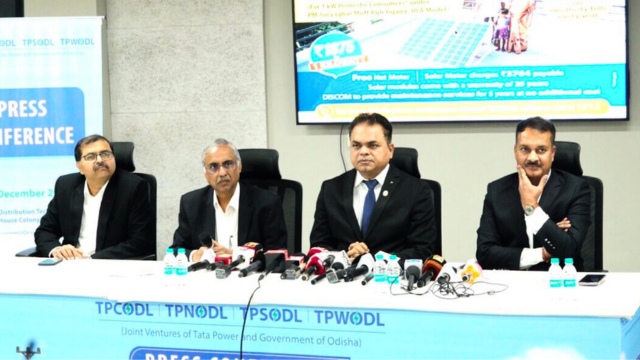
The move, which has sparked protests from consumer rights groups and political parties alike, has put the power utility under significant scrutiny. On Thursday, company officials briefed the media to explain the rationale behind the revised calculations and to address growing public concern.
The Core of the Controversy
The unrest began after thousands of consumers received notices demanding a one-time additional payment. In response, Tata Power explained that the security deposit is legally mandated and calculated based on a consumer’s average usage over two months.
Key points of the clarification include:
Consumption Surge: Consumers who have increased their electricity usage in recent months may find their existing security deposit (initially calculated on lower usage) is no longer sufficient to cover the two-month billing average. In these cases, the “gap” must be paid as an ASD.
Refunds for Lower Usage: In a move to calm the public, Tata Power stated that consumers whose usage decreased during the 2024–25 financial year might be eligible for a refund. If a consumer’s existing deposit exceeds the required amount by more than 10%, the excess will be adjusted against their future electricity bills.
Interest Benefits: The company highlighted that consumers are not losing money; they receive annual interest at a rate of 6.50% on their security deposits. This interest is credited and adjusted in their bills annually.
Default Protection: Tata Power maintained that the deposit serves as a financial safeguard. If a consumer fails to pay their bills, the outstanding amount is recovered from this deposit before disconnection procedures begin.
Political Battleground
The issue has quickly escalated into a political firestorm between the Biju Janata Dal (BJD) and the Bharatiya Janata Party (BJP).
BJD Protests: The Biju Janata Dal has staged demonstrations outside Tata Power offices across the state, accusing the company of placing an “unfair financial burden” on the common man. They have demanded an immediate withdrawal of the ASD notices.
BJP Counter-Attack: The ruling BJP has dismissed the BJD’s protests as political opportunism. BJP spokesperson Manoj Mahapatra pointed out that the agreements and legal provisions governing Tata Power’s operations in Odisha were established under the previous BJD government led by Naveen Patnaik. “The very party protesting today is the one that brought Tata Power to Odisha,” Mahapatra stated, adding that the current government is working to safeguard consumer interests within the existing legal framework.
By the Numbers
Odisha currently has approximately 87 lakh (8.7 million) electricity consumers. Data suggests that:
98% of consumers use less than 2 kW of electricity.
16 lakh households have already been transitioned to smart meters.
Current Status
Despite the explanation provided by Tata Power, public anger remains high. Consumer bodies argue that the timing of the demand is poor, especially for low-income households. While the company hopes that the promise of interest payments and potential refunds for low-usage consumers will defuse the situation, protests are expected to continue in several districts through the weekend.