

Regulatory Rigidity vs. Operational Reality: DGCA’s FDTL Mandate Triggers Multi-Million Dollar Aviation Meltdown

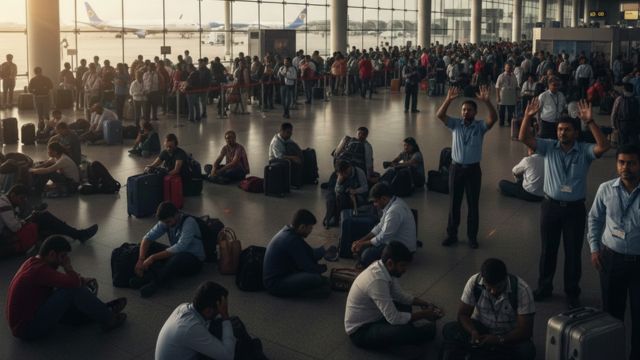
India’s bustling airports, usually a testament to the nation’s soaring economic ambitions, have recently become scenes of chaos and frustration. Over the past few weeks, a perfect storm of regulatory changes and long-standing industry challenges has grounded hundreds of flights daily, leaving thousands of passengers stranded and the airline industry reeling.
The crisis, initially highlighted by the mass cancellations predominantly at market leader IndiGo, quickly evolved into a stark revelation: this isn’t just an airline’s operational hiccup, but a systemic breakdown ignited by new safety regulations and exacerbated by years of lean crew management.
The Problem Takes Flight: A Cascade of Cancellations
The trigger was the Directorate General of Civil Aviation’s (DGCA) enforcement of Phase 2 of its revised Flight Duty Time Limitations (FDTL) rules, effective November 1st. These regulations, designed to enhance pilot safety by increasing mandatory rest periods and redefining night duty, were lauded for their noble intent. However, their immediate impact was brutal: they effectively slashed the productivity of India’s existing pilot pool by an estimated 15-20% overnight.
“One delay pushed a pilot into the new, stricter ‘night duty’ window. That pilot timed out,” explained an industry insider. “Because the DGCA’s new rules had already soaked up all the spare capacity, there was no one to replace him. The flight was abandoned. The plane was stuck. The next day’s schedule collapsed.”
This wasn’t an isolated incident; it was a domino effect that ricocheted across the network, most visibly impacting IndiGo. While the new rules applied to all carriers, IndiGo’s dominant market share (nearly 60%), massive fleet, and famously lean operational model meant it had the least buffer to absorb the shock. Its cancellations alone numbered in the hundreds daily, dwarfing those of its competitors and monopolizing headlines.
Who’s to Blame? The Regulator and the Regulated
The blame, say experts, lies at both ends of the runway.
The DGCA’s core failure was enforcing a critical constraint (reduced pilot hours) without adequately ensuring or even mandating a corresponding increase in pilot capacity from the airlines. They knew India faced a chronic shortage of experienced Commanders, yet they approved winter schedules that were mathematically unflyable under the new FDTL rules. It was, as one analyst put it, “a deadline without a mandated roadmap for compliance.”
Airlines, on the other hand, cannot escape accountability. They had a significant two-year lead time to prepare for these well-advertised changes. However, many, particularly those focused on cost efficiency, gambled on managing with minimal crew buffers, possibly underestimating the full impact or hoping for extensions. This shortsighted approach left them catastrophically exposed when the deadline hit.
The most damning evidence of this regulatory rigidity versus operational reality came with the news of the DGCA considering a “temporary waiver” for airlines to ease the chaos. Critics immediately questioned: if these rules were truly non-negotiable for pilot safety, how can safety now be put on hold until February? The waiver implicitly acknowledges that the November 1st deadline was, at best, arbitrary, and at worst, a miscalculated gamble.
The Financial Fallout: A Heavy Price for Chaos
Beyond the immediate passenger misery, airlines are staring down a significant financial hit:
- Massive Revenue Loss: Hundreds of cancelled flights mean millions of dollars in lost ticket sales.
- Soaring Payouts: Airlines are forced into costly refunds, re-routing passengers on competitor flights, and paying out regulatory compensation, along with potentially footing bills for hotel stays and meals.
- Permanent Cost Hike: Most significantly, the FDTL rules mandate a permanent increase in pilot staffing levels. This means higher recruitment, training, and salary costs across the board. The era of ultra-lean crew utilization, a cornerstone of low-cost operations, is over, forcing a fundamental reset of the airline’s cost structure.
- Eroded Trust: The damage to brand reputation and passenger loyalty is immeasurable, potentially driving travelers to competitors long after the immediate crisis subsides.
Looking Ahead: A Bumpy Recovery
The DGCA has now demanded fortnight-by-fortnight progress reports and a clear roadmap from airlines to achieve full FDTL compliance. The true test will be whether this leads to genuine, long-term capacity building—especially for the crucial Commander roles that take years to develop—or merely a temporary scaling back of flights until the busy winter season pressure eases.
For India’s ambitious aviation sector, this chaotic episode serves as a sobering reminder: safety regulations, while paramount, must be implemented with a realistic understanding of industry capacity and a proactive strategy for structural change. Without it, the skies will remain turbulent, not just for passengers, but for the airlines themselves.