


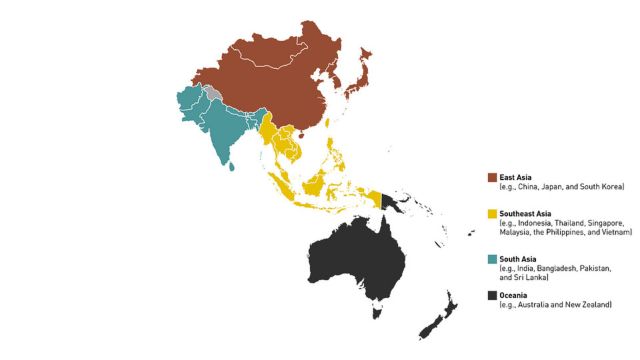
A confluence of strategic public infrastructure and massive AI investments is cementing India’s role as the central engine of digital transformation in the Asia-Pacific (APAC) region. Recent developments underscore a powerful trend: India’s digital economy is expanding at nearly twice the pace of its overall GDP, setting a new template for technology-led economic growth.
India’s DPI Model: A Template for the Global South
A key finding from a recent India Exim Bank research report highlighted that the global trend is a slowdown in economic integration while the Asia-Pacific region is showing an increase in intra-regional trade and investment, driven significantly by its fast-growing digital sectors.
India’s success is attributed to its Digital Public Infrastructure (DPI), the open-standard technology architecture known as India Stack.
- Financial Leverage: Core DPI components like Aadhaar (Digital ID) and UPI (Real-Time Payments) have reached a “leverage” stage in finance, enabling millions of users and sparking massive private innovation. UPI alone processes over 10 billion transactions monthly, demonstrating the scale of digital adoption.
- The Next Frontier: While finance is mature, the focus is now shifting to build DPIs for other critical sectors like agriculture (Agri-Stack), logistics (ULIP), and healthcare (Ayushman Bharat Digital Mission), though these remain in the early “implementation” stage.
The report suggests these DPI models are highly scalable and can be shared with other APAC countries looking to achieve rapid, inclusive digital financial inclusion.
AI and Data Centers: The New Infrastructure Race
The foundation for this hyper-growth is being rapidly built through huge investments in high-density compute power.
- Google-Adani Megaproject: In a major show of confidence in India’s digital future, the Adani Group pledged up to $5 billion for a joint venture with Google to build one of the largest AI-ready data center campuses in India. This project, which aims to deliver about 1 gigawatt (GW) of power, is a clear sign of India’s shift from being a user of digital services to becoming a global provider of digital infrastructure.
- Regional Data Boom: The APAC datacenter market (excluding Japan) is projected to reach 142,600 MW by 2029, driven by an aggressive 22% CAGR. Emerging markets like India, Indonesia, Malaysia, and Vietnam are becoming core hubs for this expansion, taking pressure off established but power-constrained markets like Singapore and Tokyo.
Experts emphasize that the next phase of growth will involve the convergence of DPI and Artificial Intelligence (AI), moving from Digital Public Infrastructure to “Digital Public Intelligence” to offer more anticipatory and citizen-responsive services across governance and welfare.
Intra-Regional Trade Provides Resilience
Crucially, the report noted that the APAC region is finding strength through itself.
- Intra-regional trade has grown significantly, with more than half of Asia’s total trade now occurring within the region.
- Asian economies are increasingly investing in one another’s markets, creating a robust FDI trend that acts as a stabilizing force against volatile global economic changes.
Key Takeaways for Local Industry
The trend confirms that the future is service-led and technology-integrated. For a state like Odisha, these trends offer a blueprint for development:
- Service Sector Investment: The global shift away from manufacturing dominance and toward services means investing in education and skills for digital service jobs is paramount.
- DPI Integration: Leveraging India’s mature DPI, such as UPI and the upcoming Agri-Stack, is essential for local businesses, farmers, and MSMEs to access markets, credit, and government services efficiently.
- Digital Infrastructure Readiness: The need for data centers and high-speed internet to support AI and cloud services points to opportunities for infrastructure development within the state.
| Focus Industry | Reason for Focus / Impact | Key Countries Leading Growth |
| 1. E-commerce & Retail | Fueled by a rapidly growing middle class, increasing disposable income, and high mobile/internet penetration. E-commerce giants (like Flipkart in India, Alibaba in China, and GoTo in Indonesia) are challenging global players and driving new consumption. | China, India, Indonesia, Japan |
| 2. FinTech (Financial Technology) | Digital financial inclusion is a massive driver, especially in countries where traditional banking is less widespread (leapfrogging theory). Solutions like digital payments (India’s UPI), mobile wallets, and online lending are revolutionizing finance. | India, China, Singapore, Indonesia |
| 3. Digital Public Infrastructure (DPI) | Government-led, open-source digital identity (Aadhaar), payments (UPI), and data-sharing frameworks (ONDC). This provides a low-cost, scalable foundation for private enterprises to build on, accelerating digital adoption across all sectors. | India (a global model), Philippines, other nations adopting similar frameworks. |
| 4. Digital Services & Outsourcing | Shifting from a manufacturing-centric model to a services-led economy. This includes IT services (software, BPO), EdTech, and HealthTech, often leveraging a large, skilled, and cost-competitive workforce. | India, Philippines, Vietnam |
| 5. AI, Cloud & Data Centers | These are the foundational technologies boosting productivity and efficiency across all industries. Demand for AI-driven solutions and the cloud infrastructure (data centers) to support them is surging, making them critical investment areas. | China, Japan, South Korea, India, Vietnam (for data centers) |