


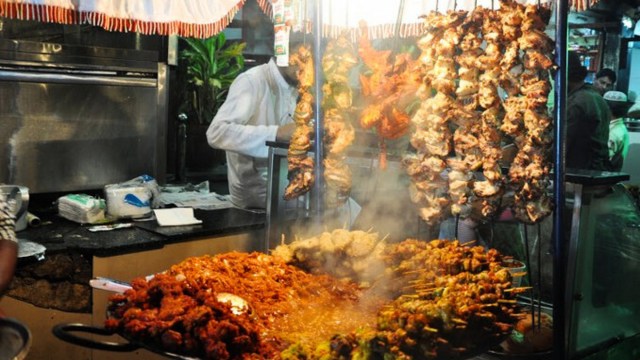
BHUBANESWAR – As the curtains drew on 2025, the capital city of Odisha witnessed an unprecedented culinary frenzy. Local non-vegetarian traders reported a record-breaking single-day turnover of over ₹7.01 crore on New Year’s Eve, marking the highest commercial peak for the industry in the entire year.
The surge, fueled by a combination of large-scale hospitality events and intimate household celebrations, surpassed the previous year’s mark of ₹6.87 crore. The data, released by the All Odisha Non-Veg Traders’ Federation, highlights a robust appetite that seemingly defied inflationary pressures in the food sector.
Market Breakdown: Mutton and Poultry Lead the Charge
The demand was spearheaded by red meat and poultry, which together accounted for nearly 70% of the total revenue.
Mutton: Approximately 52.5 tonnes were sold, generating ₹2.52 crore. Despite prices holding steady at around ₹850 per kg, the premium meat remained the preferred choice for celebratory feasts.
Poultry: Chicken sales reached a staggering 195 tonnes, contributing ₹2.36 crore to the kitty.
Seafood & Eggs: Fish markets saw brisk movement of high-end varieties like Hilsa and Tiger Prawns, netting ₹1.58 crore, while egg sales rounded off the figures with a ₹55 lakh contribution from 4,000 cartons.
The “Wednesday Factor”
Industry analysts point out that the calendar played a significant role in this year’s windfall. New Year’s Eve fell on a Wednesday—a day traditionally favored by non-vegetarian consumers in the region—further amplifying the volume of bulk orders from hotels, pubs, and event organizers.
While the figures reflect a booming consumer market, they also bring to light the logistical challenges facing the trade. Sk Muntaqeem Buksh, President of the All Odisha Non-Veg Traders’ Federation, emphasized that the current infrastructure is struggling to keep pace with the growing demand.
“The record turnover proves that the consumption capacity of Bhubaneswar is expanding rapidly,” Buksh stated, as reported by The New Indian Express. He urged the state government to prioritize the construction of modern, hygienic market complexes to replace aging retail hubs, ensuring that the city’s food supply chain meets international safety and sanitation standards.
The ₹7 crore milestone is more than just a celebratory spike; it is a clear indicator of Bhubaneswar’s evolving urban economy. For local traders, the 2026 kickoff provides a strong momentum, though the focus now shifts toward whether the city’s infrastructure can evolve fast enough to support this high-velocity growth.